
The Prisoner-(my) Final Word

Rarely have I written a post so polarizing as this one. I received a ton of feedback, both in the comments, and in person.
Since this is my blog, I get the final word (I hope?). Here are my wrap up comments hoping to provide a little epilogue to the mini controversy.
- This post was meant to be lesson for small wineries, first and foremost.
- In hindsight, I realized that The Prisoner probably did start out as a very small boutique winery, that grew very large through the very marketing methods detailed in this post
- Big does not necessarily equal bad. Although there is a strong correlation between the two.
- My snarky comments probably fueled speculation that this was a passive aggressive knock on this wine. It sort of was, however, the focus shouldn't be on my comments about the winery, more so about the fact that this is truly brilliant marketing.
- I do despise this wine and wines of this style, I believe that "crowd pleasing" is a cop out for dumb, sweet wines. I appreciate the fact that they have made the world safe for non-mono varietal wines, but I also think that they are leading people right down the road of the bad overpriced Napa cabs we've all grown to loathe.
- It's easy to be a critic. I applaud anyone who creates. Only the most influential could ever be a victim to my smarmy backhanded critiques, so if they catch my ire, they have already funded their retirement, and it comes with the territory of being a leader.
- I am not jealous. I just disagree with the style-don't confuse the two. Jealousy is a lazy knock.
- I don't disparage anyone that sells this wine. They have all done well for themselves with it, and in the world of quality wine, selling out really isn't fair. We rarely have a chance to select our own portfolio, and only a fool would say no to this sort of income.
- People are wildly defensive about the wines they sell-I also decided that I would be equally defensive about one of my producers-affinity for your selections is an important part of this business, and a topic I will delve further into next week.
Your dissenting opinion may be the key to engagement
 Are you an affable, dependable, smiling well-groomed, honest and conscientious salesperson? That's good, but it's just not enough. You may be missing out on engagement. In this new era of social media, we are always discussing engagement. In those circles, engagement is the back and forth dialogue with the people that read your blog, twitter feed etc. The term has certainly been co-opted by the new mediums, but what does it mean in a one-on-one sales call?
Engagement is simple but very telling. It is a conversation. It can be small talk all the way up to real conversations about sales. Being that we are in the wine industry, we are surrounded by educated, intelligent, opinion spewing machines we call wine geeks. Wine geeks want to know how you feel about certain things, film, music art often will flow through conversations and a little friendly ribbing can be acceptable. When it comes to wine, however, many salespeople will be diplomats and start answering questions like they're on the witness stand. They are slightly uncomfortable with having a candid conversation and issuing a real opinion. Why do some salespeople close up the opinion shop when asked? Simple-Bad Training!
Many sales training professionals advise us to be aloof, vanilla, never controversial. This works great when you're taking an order for The Cheesecake Factory, but when you go to Joe's Underground Geek Wine Emporium, you better have an opinion to back up your TJ Maxxx tie. Your credibility as a sales rep will be made or broken depending on your opinions about all wine geek things. If you have an opinion, you'd better share it and back it up. If you don't have an opinion, you should probably ask for a different route.
This is engagement. This is the real back and forth between wine professionals besides the rote: weather kids, economy conversations. And with many accounts, its in these margins where you will succeed or fail.
Yeah, I get it, the Prisoner has escaped.
 November is the time of year when limited release products are often unveiled. This is not a coincidence. This is when consumers buying expensive wine seems commonplace. Great hype often surrounds the trumpeted and rare opportunity to buy velvet lined boxes of something. One of the great scams/ marketing genius moves of all time was released just last week: The Prisoner.
*As a side note, I have many friends and colleagues that buy and sell this wine with great success, and I know many consumers that have enjoyed it over the years, this is simply a commentary not on the wine, but how powerful marketing can be.
The concept is simple: The wine is a Napa Blend primarily of Zinfandel, all purchased fruit. There is Cab and Charbono in the blend as well. The wine is released, a la Beaujolais Nouveau on a set date, November 1, to great pomp and circumstance. This seemingly limited wine is pre-sold like you just won't be able to get it. The label is quite attractive, and the entire package feels special. It gets a Napa Valley appellation and it's $35. Here's the thing: they make 70,000 cases of this one wine. What does that mean in relative terms? 70,000 cases makes them bigger than 95% of the bonded wineries in California, just from one wine. Strictly from a production standpoint, this is a very un-rare wine. So how does a winery that produces so many cases, maintain the aura of being special and rare? Marketing.
Rule #1: The label matters. This hand drawn label looks like it belongs in the ranks of the wines of Sine Qua Non.
Rule #2: Mystery. The proprietary name,along with idea of a mysterious blend is intriguing
Rule #3 Score. This wine has received some nice press by placing James Laube's palate right in their cross hairs. A little American Oak and Cab to
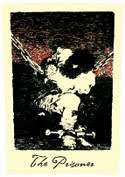 spice up their Zin, and Laube all of a sudden likes this more than most Sonoma Zins (wonder why?). Oh, that would typically get you about 92 points
Rule #4 Price. $35 seems like a lot of money for a Zin based blend. Comparative pricing puts it about the sames as Ridge single vineyard bottlings. But this isn't a wine for serious Zin people. It's a wine for people that think that a blend is something to shop for. Therefore, this is expensive, but not too expensive. This is really the sweet spot for less serious wine drinkers trying to step up.
Rule #5-Perceived scarcity-Can I just one more time say 70,000 cases!!! They have told the people that want to buy their wine what they want them to believe, that this is a limited availability wine. This is Disney and their DVD vault all over again.
Rule #6-Place is important. As long as it says Napa.
The marketing minds behind this wine have done an incredible job of selling through this wine, much to the delight of many, many people. If you happen to produce an actual limited amount of wine and are having a tough time selling through your production, there is much to learn from this example. I would not recommend trying to replicate this model as it is built on a bit of hype over reality. That's always a tough strategy for long term growth, but an excellent way to entice some sucker into backing a truckload of money up your driveway.
Looking for affirmation from critics can be infuriating

Last Friday, the new erobertparker issue was released. I quickly scanned through it,as this part of my job. I had ups and downs throughout the issue. Some reviews I agreed with, some I disagreed with, and some just confused me. But I actually had an epiphany reading through these. Frankly, I may be slow to figure this out, the reason why we're all over critics-because they don't automatically affirm what we think we know.
When we scan the reviews in Spectator, or Parker, we already have a predisposed opinion about many wines. Of these wines, we have taken the time to determine how we feel about them, sometimes our bias is thrown because we have skin in the game i.e.: money or income. Sometimes it's simply because we have developed an affinity for a producer. When we see a review that doesn't go along with what we think they should be, it's tremendously frustrating.
Think about when one of the wines you love gets a great review. You all of a sudden feel redeemed. You feel like you picked out this diamond in the rough before anyone could discover. It's like you're frickin' Magellan. Feels awesome. What about when you taste a wines that you've never had before that one of the rags had dropped a 94 on? You're hypercritical, unless of course it winds up in your portfolio and you get to sell it.
Ultimately, we're all human. Try not to let your bias (you do have one whether you know it or not) get in the way. The reality is a review is just one person's attempted unbiased opinion (James Laube aside). In most cases, if this was a jury, you wouldn't make the cut, you have too much prejudice about the matter. If you really want to bag on the critics, take the truly biased ones to task first.
Isn't there some sort of line about judging not lest ye be judged? Yeah, this applies.
Our wine knowledge is turning into a wiki
There are certainly important figures within the wine world that have tried desperately to provide a wine course, most notably, Kevin Zraly. These people are owed a debt of gratitude, but one person, or a group of people, have been largely ineffective in teaching the masses the upper level courses of wine knowledge. The deeper you go, the scarcer the organized education becomes. I've bemoaned how, as an industry, we test well but don't teach so well.
What we have done as a group, is become our own greatest sources of information. The floating conventional wisdom of our wine tribe is ever changing, and rarely verified. This resembles the concept of a wiki. Now, we use wikipedia quite a bit, but what I am referring to is sort of the common thoughts we all gather from each other. We are all educating each other, constantly comparing notes, and ideally, constantly editing our own knowledge bases.
The thundering herd, all racing to the middle
 As a wine sales professional, how do you measure your success? By not catching anyone's ire? By flying under the radar? By comfortably showing up to your accounts every day, chitchatting about the weather, punching in at 10:30 and out by 4:30. It may seem good enough, but it's not.If this sounds like you, you are an order taker.
*Broad generalization alert*
I am noticing more and more, sales reps using each other as the barometer of success. They are running the race like it's a marathon, just trying to stay with the pace. When they start losing placements, the buyers become "idiots". They aren't sampling every day, and when they do, it's obviously items that are on goal and have no rhyme or reason for that account. Incidentally-it's a lot easier to fulfill goals when they sample everyday, and sprinkle them into their usual presentations, this way it won't look suspicious. If they follow the lead of the pack, then not only will they never be in control of their business, they cease to be assets and become neutral, or a liability to their accounts. This business isn't a marathon, every placement is a sprint. It's not difficult to be excellent.
There always have been plenty of salespeople out there driving their company cars with their antiquated palm pilots. Mostly, they aren't really very happy about their role in this mortal coil. You don't need to follow them to the middle. You are selling wine! I can't overemphasize how cool this is. It's not easy, but if you can stay motivated, and your own toughest critic, you can excel. I mean, you already know what the standard is, and you should be able to easily exceed it.
If you're in wine sales, the calendar just caught up with you
 We're here! OND! For those uninitiated, OND is-October, November and December . A time during which, we have been led to believe, all of the wine is sold for the entire year. This is obviously not true, I railed against this thinking last year. That said, OND is still very important. A disproportionate amount of wine is sold during this 3 month stretch. Couple that with the fact that you can't get a solid presentation scheduled during November and December-This is the last month of the year to influence any purchases for the next 3+ months.
Pressure? Nah. It's not as daunting as it sounds. as a salesperson, there are a few things you can do to make this last window of opportunity pay off:
- Be on call 24/7-If your account calls you, even after hours, answer it. I'm all about the work/ life separation. October is the only month of the year where I say duty calls.
- Do favors-Maybe this means standing and pouring at multiple charity events. Do it, this is the time when your buyer will call in those favors. It may not translate into acute purchases, but it's also an awfully good way to lose business you have just by annoying your buyer when they need you.
- Be creative and observant-If they aren't already in place, help your buyers develop original strategies, whether this is displays, events or just purchases.
- Do every in store/ restaurant event you can- Your buyers will appreciate the help and it's good way to get the higher traffic tastings in the next 2 months, by paying your dues in the last moderately busy month.
- Sit down with your buyers to determine if you should modify your account call times for the last 2 months. Peak hours will change, and if you're sensitive to their needs, they will enjoy doing increased business with you.
- Don't press-Buyers sense desperation, and will always blow you off if you sound desperate. Remember, their job is not to do you favors, but to do favors for their own bottom line.
- Finally-Hustle, find your groove.
When good wine seems bad, or, nibbling at some potential hocus pocus
 Last week was a typical week weather wise here in the mid-west. One day it's sunny and clear, the next, cold and rainy. Temperatures were all over the map. I was mired in a series of 4 trade tastings in a row. One of my colleagues had noted that some people believe wines taste different on different days based on whether or not its a flower or root day. I had heard this, in fact, the buyers from Tesco (Large British Grocers) famously, only taste on whatever the right type of day it is. This led to a discussion about atmospheric conditions affecting the way wines show. I had never knowingly experienced this phenomenon, but it sounded like maybe it's not impossible. We then went to set up the tasting for that day. Nearly 100 bottles were opened. We discovered through the course of the day, nearly a dozen were flat out corked-considering a pretty good smattering of stelvin and vinoloks, this was a lot by any industry standard. Couple that with the fact that most were higher end wines from relatively modern winemaking facilities-this was a very significant outlier. I had just done 2 tasting in the days before, with about half as many wines, and only 2 corked bottle in the 2 days combined. The next day, again, about 50 wines, none corked. Now, I'm all about the Infinite Monkey Theorem, but this seemed more than coincidental. The bad day, was raining cold and obviously a low pressure day barometrically speaking. In addition to the corked bottles, I kept finding wines that I really know well, to be showing really tight and unforgiving. Next day, everything was fine, and it was a beautiful day.
I need to go on record as saying that I am a cynic. I would have likely dismissed all of this and you wouldn't be reading about it if I hadn't seen something like this first hand. The power of suggestion can be a powerful thing though. On the othe rhand, we've all seen wines we know and love, acting not quite the they did when we first fell in love with them. My question for you is: What do you think? Every experienced anything like this? Flower or Root? Barometric pressure? Humidity? Moon Phase? What is it? And to really make you think, is that variable actually affecting the wine or our finely tuned palate?
The inevitable trade show
 In most markets, September and October are widely recognized as trade tasting months. Distributors jockey for the exact date they want months in advance, try to book as many tables as possible and charge outrageous table fees. In most cases, this is a tremendous waste of time and energy. If you are a large distributor, this is an inevitablity. You don't sample enough wines during the rest of the year, so in order for your customers to get to know your product, you need to rent a hall, and serve mottled cubes of co-jack cheese.
For the rest of us, a trade show may be optional. I know that this betrays conventional wisdom, but it's true. You could actually just sink your budget from a trade show into increasing your day to day inventory and sampling budget. You would get no complaints from your suppliers, and their money is also better spent investing in your sampling programs and incentives for the sales team. If you can't shake the guilt/ obligation feeling of needing to host a trade show here are a few very important guidelines:
- Don't waste anyone's time-Whether this is your customer or your supplier. Make sure there is a good reason for them to be attending your show.
- Pick a good location-Sometimes the oddest venue is the most memorable.
- Great and interesting food-no brainer
- Be original in everything
- Blow them away with your selection-Open a few ridiculous bottles
- Create a buzz-If you do the above things well, this will follow
- Understand why your are hosting an event-For P.R.! If you are a small distributor, you need to reinforce why people are doing business with you. This is your one time of the year to show them what your business looks like beyond 1 salesperson, 1 delivery guy and an invoice. Details are very important.
- You can't replace 9 months of poor sampling and representation with 3 hours in a crowded room somewhere.
- Make it fun for the suppliers-Take them out somewhere cool afterward. Arrange interesting ideas for them to burn free time. These get really old really fast. If you can coordinate some cool down time activities, you'll be a hero. Happy Suppliers= more sales.
You can't discount optimism
 In a counterpoint to my last blog post about the "Dinosaurs of Retail", I'd like to call attention to a new species of retailer: The one that succeeds because they don't know any better.
The old guard and conventional wisdom of the wine world have a way of suppressing even the most rampant wide eyed enthusiasm. As times have changed, the merchants that prospered during the 80's and 90's became cynical as their market changed. Once in a while, you come across a retailer that hasn't been jaded, one that doesn't realize that times have changed. The state of the business today is the only reality many of them have ever know. This gives them a huge leg up on the competition. They haven't fallen victim to conventional wisdom yet, and as a result, they are discovering the new boundaries of where our market is.
Consumers haven't stopped buying wines that cost hundreds of dollars, though, that market surely has diminished. The new guard, just discovering some of the world's best wines, are coming up with creative ways to turn consumers on to them. I am now seeing break-even tastings featuring wines worth hundreds of dollars. More people will pay $25 for a 2 oz pour of Chave or a "la la" than you would expect. The rare chance to try one of these wines may be enough to turn someone into a collector. The amazing correlation to all of this of course is the decreased reliance on the Ratings Rags.
Veterans of the industry are quick to dismiss what this new breed is doing. I just can't see why they would want to squelch this approach. It seems like telling a tightrope walker to "look down". My message to them, don't trust the old guard, you're doing great.
The dinosaurs of retail
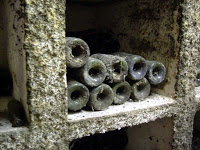 It seems that no matter where you are in this country, you can always find a dusty, tired, sad, dark, cold wine shop, that is run by a crusty guy that laments on how much better things used to be. As much as the economy hasn't been all that great as of late (you may have heard this), every indicator suggests that the wine industry is very healthy, specifically in the consumer sales growth department. Some speculate that fine wines (over $20 retail) sales, growth has eclipsed 10% for more than 12 out of the last 13 years.
So why do so many veterans think the wine industry used to be so much better? The easy answer is-It's changed, and they haven't. There was a time, not that long ago, when big corporations would send a peon into their local wine shop (the aforementioned dirty dusty archetype of what a wine shop was perceived to have been) to purchase a dozen cases of overpriced, brand name Napa Cab for their 100 or so best clients. They did this a couple times a year, and was repeated by many companies. Imagine how easy those sales were. No inventorying, just clearing at a 30% markup. Thank you and thank you. This was enough business to sustain the other 10 or so months of the year when business came in the door in a trickle. Frankly, the buyers at these shops didn't feel obligated to be all that nice to the novice wine buyers that require a lot of attention for a 1 or 2 bottle purchase.
Flash Forward 10 years, what has changed? The expense accounts have disappeared and the wine buying public has been replaced by the 25-34 demographic. They grew up in the age of Urban Outfitters and The Gap. They like bright eyed wine shop owners with ample lighting and clean shelves. They also like knowledgeable friendly wine shops that have enthusiasm and patience. If they aren't catering to the novice and hosting great in-store tastings, they're just waiting to go extinct, like the gaudy expense accounts that their business was based on.
Your first wine list sucked, Sorry, but it did.
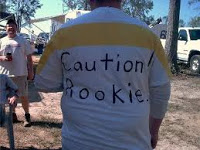
I was in an account earlier this week, where the buyer had just taken over from a waiter that was handling the wine list. The new buyer was a pretty savvy guy that clearly knew what he was doing. He and the sales rep I was with were having a pretty hearty laugh at the current wine list. I immediately sympathized with the former buyer. The list was chock full of classic rookie foibles. It was a wasteland of Cakebread, Chalk Hill, Sonoma Cutrer, Banfi and Jadot. Clearly the big guys had gotten to him. Thing is, it looked an awful lot like the first wine list I wrote, and the wine list that seems to repeat itself over and over. Odds are, if you've ever written a wine list, your first one sucked too.
The above mentioned wines are fine on an educated buyer's wine list. They can often give safe harbor for the intimidated customer and can be used to fill specific needs. This guy had no idea the interplay between all of these mainstream selections. They are all safe harbors, playing it safe turns the wine list into a grocery store aisle. Rookie buyers need to be able to write a list, no matter how bad it is. They will learn. I remember thinking when I was writing my first few lists "I hope I don't make an ass out of myself on this one". The poor waiter whose list they were cracking hard on was written as a safety move, the catch 22 is, he didn't know enough about wine to write a good list yet. Damned either way.
How do they get better? Simple. It's up to us to educate the rookie. Not with propaganda, but with interesting and diverse samples. It's our responsibility to show rookies wine, even if it makes no sense in their establishment. Not for them to buy, but to help them expand their horizons. Help them figure out their palate, and what works for them. In our world, their is nothing more rewarding than putting together the best wine list of your life, and that's usually each subsequent one after the first.
Kings of the 4-day work week
 "Wine sales", as was once told to me by a mentor, "is the hardest business to be great in, but the easiest to be bad in". What he was getting at, of course, is the impossibility of accounting for a sales rep's time. It's pretty easy to do the bare minimum, work a modified cherry account run, and still earn a buck. As managers, we assume they are diligently seeing all of their accounts, giving solid presentations, volunteering for events, and generally being accountable. The reality is, we have no real way to know on a day to day basis what is going on out there. There are plenty of companies that try to make them submit plans for the day ahead, or for the previous week, but no one ever really double checks.
What has eventually happened, is the entire day of Friday has been largely written off as a selling day. There are usually no deliveries on the next business day (Monday), and it has become culturally acceptable to be creative with this time. This is the most common day for sales meetings, sometimes requiring many hours in the car to and from. Often the time is utilized for end of week paperwork, and emergency weekend deliveries. What if this time were used to sell wine? What if you were to take a bag of samples out, say, 2 Fridays a month?
There are a number of reasons beyond the cynical that we don't really work the market on Fridays. Many retailers are busy getting ready for the weekend, ditto restaurants. But what if you are likely the only rep out there on Friday, and you have an appointment? You will get a better crack at an uninterrupted presentation than if there are 4 reps lined up behind you. If you are well regarded by your accounts, they may even welcome the diversion. Each account is a little different, so Friday's need to be handled carefully. This presents an opportunity to be better than good enough, and certainly better than the majority of your competitors.
Jealous Much?
 Never waste jealousy on a real man: it is the imaginary man that supplants us all in the long run. ~George Bernard Shaw
As of late, I have run into a tremendous amount of distrust amongst distributors. Since I am no longer a distributor, I have really been seeing it through different eyes. Perhaps naively, I put together a company that wasn't too closely linked to just one distributor, but instead diversified among a handful of superior companies. I assumed that when it came to the issue of reps seeing me on the streets with their competitors, it wouldn't be a big deal. In some cases I was right, but in many cases I was wrong. Without really getting into the gory details, I'll just say that as I am having increased success, my distributors are wondering which distributor my priorities are with. The reality is, my priority is with my winery clients. But I definitely give attention to the companies that reply to emails and phone calls. There's plenty of me to go around, just utilize me! I don't prefer one distributor over another. They are all my partners, and I sincerely want them all to succeed.
This all may speak to a deeper issue. One that isn't discussed very often. The real competitiveness of many distributors. As times have gotten tougher, I see distributors fighting each other more and more. I see maneuvering, and dirty tricks more than ever. Maybe I'm a "great society" type that says that if distributors put together great portfolios, strong training, are honest and help accountable, then attrition will take care of everything. This is all of a sudden, a very cutthroat industry at an equally cutthroat time. Everyone just needs to chill out a bit. The reality check should be that you aren't competing for just one placement. Buyers will stock their stores with as many items that a) make sense b) you give great presentations to c) fit what they need at that price. Notice how those 3 factors do not include your competitors. The truth is, you are the biggest variable, you can't worry about your competitor if you're not taking care of your other business. It's like being competitive with the weather.
Winemakers working the streets
 How many winemakers does it take to screw in a light bulb? One, They just hold the bulb in the air and the world revolves around them.
I wouldn't be able to pass that along were it not for a very good and self aware winemaker I know. In our little world, the winemaker is the head celebrity. They are the ones whose names are bandied about, and the ones whose mugs end up on the cover of Wine Spectator. It's no surprise that when they are in the market, they sell more wine than us civilians. Most winemakers recognize this is an aberration in the market, and that buyers are ALWAYS more likely to buy wine when a winemaker is there. Many of them further recognize that when they visit a market, it's the grunts that are putting together as good a day as possible. They will see routes that we never really see because of our obligations to run the B and C accounts as well, accounts they never will visit.
That said, there are actually winemakers out there that believe that they are better salespeople than us, and that they understand the market conditions better than we do. This, in part, is because it comes so easily to them. They also can have a valid take in some instances, when the sales reps are really sub par (and we know there's plenty of them out there). But there are winemakers delusional enough to believe that what we do (sales) is B.S. and that we're lucky to even be able to sell their precious products. I'm not going to recite the reasons why the finesse, politics, patience, hard work, timing, hustle, charm, quick wit and wisdom are skills you don't learn from racking or de-stemming. Instead I will simply say this: Unless you want to be a full time salesperson, you're going to need someone with the above attributes to sell your precious juice. No matter what you think of salespeople as a breed, you need to let them do their thing, and understand that it's apples and oranges when you're in the market. You are there to support, not compete. Don't get caught up in the idea that if you can do something we can't do, that gives you a higher rank. All salespeople are really "armchair winemakers", so it's no surprise that the amateurs sometimes actually believe they can outsell us. I'll give you a challenge, go work the market with wines that aren't yours. With wines you have no affiliation with, and give out your cell number, and occasionally show up for a reset at 6 in the morning, the day after hosting another winemaker for another winemaker dinner. Sound unappealing? That's OK, thats why you have us.
So what's the deal with Paso Robles?

Paso Robles is, in my opinion the northernmost outpost on the Central Coast appellation. I know that technically, it goes further north, but here is my reasoning: The Central coast is defined by the 3 transverse river valleys, Santa Ynez, Santa Maria and Edna Valley (about 30 miles south of Paso). It's these valleys, and the funneling of the marine influence east, that provide for the wildly diverse microclimates. The reason I include Paso is because of the Templeton Gap (excellent commentary on the topic from Jason Haas of Tablas Creek). As the mountains move from east/west to north/south, the Ocean breeze swarm north along the Santa Lucia Range. North of this, the climate is different, and a little more uniform based on elevation and proximity to the Ocean. I'm sure some educated veteran will jump all over this and give me 10 reasons why my classification is wrong. That's fine, but it's my take on it, and for my me to wrap my brain around this area, this is how I call it.
 A lot of hay is also made about the Eastside vs. Westside debate. By many people's opinion, the 101 freeway bisects the region, and really makes it 2 separate appellations. It's like "Zin to the right, Rhone to the left". This is oversimplified. In reality, it's a serious of triangles. Remember that Templeton Gap? Well, as it pushes cool air north it gets trapped in all of these nooks and crannies. In theory, you could have a warmer microclimate West at a higher elevation than a high elevation further East, because the winds never make it to the higher elevation vineyards in the West but dissipate as they travel East with a constant low breeze. whew.
And then there's the soil. We all know Limestone is a buzz word, and I had always heard about the Limestone was a major reason for Tablas Creek and Calera further North selecting their vineyards. But I was always a little wary of how much Limestone could really be here. Ok,it's actually Calcareous clay (thanks again Jason), but for our intents and purposes, it's limestone. Well, there's a lot. As the plates collided to form the Santa Lucia Mountains, the former seabed on the south got shoved into the northern plate to give a ton of seafloor fossils and limestone, particularly in a crescent shaped formation stretching from Lompoc about 75 miles north, primarily on south facing slopes. Ask a vineyard manager about how often they find whale bones. What's great about limestone? Well, without getting too technical (and I've read up on this) there are 2 basic reasons why limestone is great a) it is a unique soil type that retains moisture, but only gives it to the plant in times of drought, and is a well draining soil that keeps it away from the plant during time of heavy precipitation. It's like internal drip irrigation without the soil erosion. b) limestone appears to transfer more vital nutrients directly to the grapevines more efficiently. This ultimately seems to help natural acidity develop better in the wines. For me personally, I observe a savory, umami quality in wines that grown in limestone, but then again, I may just be projecting.
There is still plenty of bad wine in Paso, and even more, solid, commercial quality inexpensive grapes grown in the Northeast of Paso. But the real story is the diversity of grapes and microclimates available here. It's so diverse that there isn't one variety or group of varieties that has emerged as the showcase. Rhone, Bordeaux, Italian, Spanish, Zin, Petite and even Burgundian varieties are all excellent from top producers. Contrary to my previous skepticism, Paso is a world class grape growing region that is still in it's world class infancy.
Getting Schooled in Santa Barbara
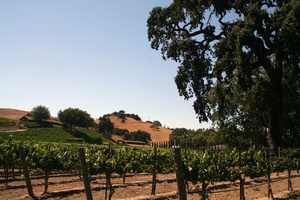 I am fortunate enough to be able to visit many of my winemaker friends every so often, and I ALWAYS learn a thing or 2. As I am in the midst of my current Central Coast tour, a few things have occurred to me.
- Pinot Noir wants to be blended-Not with other grapes, but with itself. Tasting through barrels yesterday, I saw 3 equal components of what is often revered (rightfully so), of one California Best Pinots. Each of the 3 components came from the same vineyard, had the exact same oak regime (11 months so far in 20% new French). The variable was that is was 3 different clones vinified and aged separately. They couldn't have been more different. In this rare moment, just a few months before the final blend, but long enough to have developed their own personalities, you could see where it was going and why it is such a complex finished wine.
- Santa Barbara is many things, this week I learned that it is not only Bordeaux but also Loire-We have been waiting for a long time for the Bordeaux wines to be great from SB County. there have been many recent bottlings that prove that they're on the right track. I tasted a 100% Cabernet yesterday that was as good as anything I've had from Santa Barbara, and competes very well against the very best of the new world. Priced in the low $30's, this could give Quilceda Creek a run for their money. That far Eastern edge in Happy Canyon is REALLY exciting. I also tasted a 1999 Cab Franc this week that blew my doors off. Old, pre-phylloxera roots and minimal intervention. This was varietally correct and absolutely rockin. A winemaker friend was with me, and we were just floored by what this was. Cab Franc as the Loire-ians (I really have no idea what you call someone from loire, Chinoions? Chinonoise?). so 2 Bordeaux varietal bottlings that really showed something that I just haven;t seen elsewhere in California, and these are "after thought" varietals out here.
- Syrah needs to be ripe-Conventional Wisdom has shifted so far over to the European sensibility, that we recite what wine is "supposed to be" by rote. I've also been guilty. The fact is, Syrah is one of the most complex grapes, if it ripens. It can be highly serviceable when underripe, and offensive when overripe. But the fine line that more and more winemakers are afraid of, is ripe. This should never be confused with jammy or sweet. Ripe creates 2 things you just can't get without a steady hand 1) Secondary flavors and aromas, like olives and juniper berries 2) Higher, but still integrated alcohol. We are all very afraid of high alcohol wines, but let go of your fears. In some, rare cases, in the right hands, you need the alcohol to give it weight. It's like finishing a great sauce with a pat of butter, it gives it that finish you really need. So while we all shun and run from the "parkerized" wines, maybe it's not that simple. Maybe you can't tell a book by it's cover.
Foodie Cred Check
 Are you a foodie? There are a hundred names for that term now, but you know what I mean. Have your Simpson's quotes turned into Anthony Bourdain quotes? Have you drawn a line in the sand to say what precisely you won't eat (usually somewhere in the offal category no doubt)? Do you recount Iron Chef and Top Chef like you recount Football games? How do you feel about Rachel Ray? we have definitely begun turning into a nation of foodies. This isn't a food blog though, this is a wine blog, specifically, a wine business blog.
So what does being a foodie have to do with being successful in the wine industry? Short answer: everything. Longer answer: your credibility.
At this stage in your career, it's unlikely for you to turn back and go back to the restaurant business. Hopefully, you got some good foodie chops while you were in it. Hopefully, you speak chef. What does that mean you ask? Well, it's hard to describe, but it's knowing the shorthand when someone orders a steak Medium Well. You know what it means when an employee calls to talk to the chef (they're not coming in), or why you want to strangle the waiter for saying a fish is mild, like salmon or tuna. There is a comfort within a restaurant that you can't pick up from any books or cooking shows. The rhythm of a bustling restaurant is like the tide. If you do a dinner or a tasting, it says a lot about your foodie cred in the way you move, the way you say "corner" or "behind". If the chef likes you, you WILL sell more wine.
Chefs are becoming celebrities in their own right these days. all of us can name drop til the cows come home. Regardless of their fame level, they're still chefs before celebrities. If you sell them wine, don't kiss their ass. Don't get your picture taken with them. Don't ask them to autograph your menu, or magazine cover. The tough thing to do is to be the person that loved them before they were famous. Again, you can't go back and do it now. The good news though, is that the people that make chefs famous are slow moving, you should be able to pick up on it beforehand, and treat them like you're genuinely interested in their cooking. Then again, chefs are like dogs and bees, they can smell fear (and B.S.). Be a genuine foodie. If you can't love that aspect of this job, my advice to to see if anyone needs a widget salesperson.
Creativity as a commodity-Do you understand what it takes?
 We find ourselves surrounded by people that create for a living. For those of us on the business side of the wine industry, this is something we may never fully understand. Imagine how difficult it is to create something, then do that on spec, then do that through a series of challenges, and then imagine trying to find that inspiration on a daily basis. Couple that with constant failures, frustration & self doubt. This is the life of an artist. It holds true through all mediums. Think of all of the tortured artists, musicians, actors, etc. Now, think of a winemaker or chef in the same light. If they are good, they are somewhat tortured. They struggle to find inspiration. They struggle on a daily basis with what they create.
Now take yourself, in a tie, driving around all day selling wine. Sometimes you have a winemaker as a passenger, sometimes you don't get along. Sometimes they beat you up. This is a sign that you don't understand what it takes to do what they do. You call on chefs, sometimes they seem erratic. You don't understand why their standards are different than yours. You can't seem to relate to their approach. It is not for you to question why. When working with creative types, you need to maximize their potential for success. You don't need to set the parameters. Your standard and their standard are probably different. That's ok, because it's their name on the bottle or on the menu, not yours.
Your job is easy, you can leave it at the office. People that create never punch in or out. That doesn't mean they work harder, it's just impossible for them to separate their brain functions. Sounds like you don't want to deal with them? Well, you do. They are the pinnacle of our industry. The people that create are the reasons you have a job. If you take the easy road, you'll never end up on top. If you can align yourselves with the needs of the creative people, you'll always be on top.
The wine knowledge chasm that no one sees
Wine education. I constantly harp on our inability, as a business, and as a niche, to bring people into our fold. We continue the path of exclusivity rather than inclusiveness, yet, despite our snobbery, our sales and growth continues.
The big gap seems to be from novice, to a general comfort level in a wine environment. Part of the problem is human nature. We are biologically programmed to analyze the problem (no wine knowledge) assign a few key terms and rules, and be on our way. Wine just doesn't work that way, and is therefore uncooperative. As a result, we find a wine we (think we) like, and cling to it like gollum. Then, we think we've beaten the system, and try to find validation for our beliefs. This is when wine merchants get frustrated, but it's difficult to remember a time when we were in the exact same situation. We aren't born with wine knowledge. Why do we vilify those that haven't "seen the light". It is within the wine novice on up that opportunity lies. We'd all love to have collectors lined up out our doors, but those were the 70's and 80's, time to adapt.
Here are some guidelines when dealing with the novice crowd:
- Don't show off and get geeky. You're the one servicing them, it's implied you know your stuff. Make them comfortable!
- Explain that their tastes are always developing and changing. Hold their hand and don't let them be surprised. Don't sell them Whole-cluster Grenache if they like a soft fruity red. They don't need to validate your tastes either.
- Encourage in store tastings, designate these as the place for them to learn and expand their palate. This will save them money and frustrating purchases. It also helps the dialogue.
- Encourage discovery and broadening their comfort zone, sometimes just inches at a time.
- Don't want people buying on points? Stop relying on them. Let them know the only thing that matters is what they like. You've spent countless hours selecting your set, that's the endorsement.
- Shelftalkers are salespeople's way of marginalizing you. If there aren't any of those, you will stand a fighting chance.
- You know how doctors have something called "bedside manner"? Well, you ain't House, work on yours.
The world would be a better place if everyone was a wine geek, I know. But let's face reality, your job is to sell wine. Buying and tasting is secondary, even if it's the best part of your job. Be kind and gracious, it's takes courage for someone to say they don't know and need help. Understand that they probably won't, so you need to be there to offer it sincerely anyways.