
Allocations are dead

Once upon a time, a decade or so ago, the word allocation struck both enthusiasm and fear into the hearts of the world of wine. You see, there were wines that were so sought after, that wineries and wine distributors would deem whom to be worthy to be doled out in bottle quantities, often after fulfilling other obligations. So egregious were these allocations, that they were sometime linked to completely disparate products from suppliers that have no relationship. Others were so unrealistic that only a few could really ever earn these allocations. It was a time when a high Parker score on a relatively inexpensive aussie wine sent buyers into a fervor. Allocations were once so crazy that large wineries didn't sell, they just handled allocations. Then the wine industry changed forever. Some people like to think that it didn't, but it did. It changed forever and will never be the same again.
Without reliving the economy, 9/11, housing bubble, etc. What has really happened is that buyers have rebelled against the allocations and told wineries and distributors to shove it. They don't need the wines that they were allocated. They have learned that being a good wine merchant is not determined by how much you can bully your rep and distributor into increasing your allocation, it is about finding the road that is perhaps, less traveled. It is about forging your own path, on your own terms, not being beholden to sell anything you don't want to just because they have something you do want. Most importantly though, consumers have stopped (although not completely) seeking out these rare, highly rated prizes. The ratings don't matter so much anymore, and the droning white noise of the greatest vintage ever proclamations has long since stopped shaping anyone's cellar.
It has been replaced by an egalitarian-merit based wine buying populace, that is more concerned about the opinion of the guy in the wine shop that some douche-y wine writer (thank you internet). The feeding frenzy has subsided.
How would you feel if you were on the other side of that equation? Where you don't get allocated something? You wouldn't take real kindly when the well dried up and you got your crack, would you? That's where we are now. Now, when people say allocation, I worry that this will set off some latent response that they wish they would have said to their distributor in 1999. Suppliers need to de-emphasize the idea of allocations (assuming there are many left that still need to do this). Distributors need to switch over to the old-school method of an offering. It's a much more humble tact, and more appreciated. allocations implies that only these people are going to be "offered" these wines. Take everything you get, say thank you for every order, and if you can only offer a finite amount of wine, be courteous and tactful, it will go a lot further.
Jean Louis Chave Hermitage
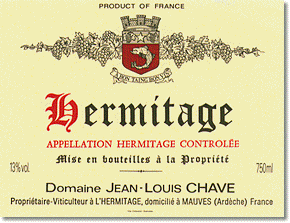 One of the greatest mountains I have to climb is giving a brief explanation of what makes Chave so special. "Scoreboard!" Is neither respectful, nor accurate. I've bought or sold Chave practically my entire wine career. I've tasted the wines countless times. I've probably tasted every vintage for the last 20 years, not to mention a respectable smattering of 60's, 70's and 80's bottlings. Yet, even after all of these years, I am just now beginning to be able to articulate what makes these wines quite unlike anything else the world of wine has ever produced.
History
Let's get this one out of the way first. Chave has been passed down father to son since 1481. 500+ years. To put this in perspective, They were old when Galileo was born. When they first planted Syrah in this family at this site, Columbus had not yet left for the New World. That's pretty old, and they've been an elite producer as far back as the books go. 16 generations. Although, if you speak to people in Hermitage (a scant 326 acres), you'll learn that Syrah has been grown here since about 500 B.C.
Varietals
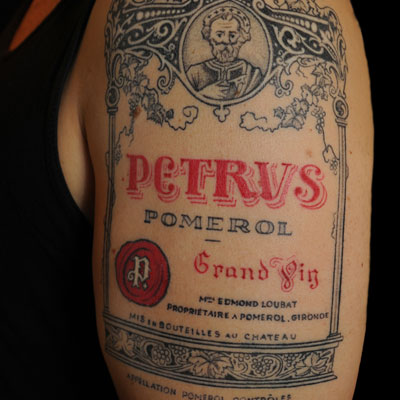
"More than anything Hermitage is great, in the sense of Grand Vin, and quite unusually, it is great for both the white and the red wines. It is very rare to have an appellation where you can make both red and white at the same level of quality." -JL Chave
In my (probably controversial) opinion, you can make a claim that Syrah is France's one true Nobel red grape. Pinot Noir is a close second, however, Pinot Noir is a little too fickle in tough vintages. It's many things, and not to downgrade Pinot by any measure, but it just doesn't quite compare to the upside of Syrah. These wines are tremendous in off vintages and age beautifully. It is a varietal that grows well seemingly everywhere, but nowhere else does it become what it is in Hermitage. There is no mono-varietal wine in the world that reaches the heights of Hermitage. The whites on the other hand are remarkable in how they elevate 2 grapes that cannot stand alone, but together, make what many believe to be be the greatest white wine in the world. Roussanne and Marsanne are difficult and unruly. They can get out of whack very easily. When they are done right, it's like suspended animation, these wines don't age, they slowly accelerate. They live seemingly forever without even turning color.
Hermitage
"When you look at our bottles you see what you need to know about us. We don't want to be Chave, we want to be Hermitage. That's where the wine comes from. It just happens to be Chave. Our vineyards are on the hills because they need to look for the sun. Hermitage is Hermitage because it faces south. If there is a place that ever was supposed to be a home for grapes it is Hermitage. I thank my history and my family for finding it. We are very lucky to have these vineyards." -JL Chave
Jean Louis Chave and Hermitage are synonymous. Chave will go to great lengths to keep the conversation about Hermitage rather than about Chave. It is these 326 special acres that is so unique, and Chave is fortunate to own about 10% of the AC including parcels of 9 of the 18 vineyards in Hermitage. Granite hillsides and a very cool climate encourage minerality and slow development. 75% is planted to red 25% is a field blend of Roussanne and Marsanne. The vines are very old, many over 100 years. So old that when they were planted, they didn't realize that Marsanne and Roussanne were different grapes. Chave does not know the percent of the white varietals only the percentages from each of the vineyards.
Grand Vin
What can be said that hasn't already been said? The critics have always (rightfully) fawned over both the red and the white. The red can show: black raspberries, creme de cassis, camphor, acacia flowers, tobacco, truffle, cocoa, braised fig, warm black currant, crushed plum, black cherry, incense, iron and black olive. all with a balanced acidity and silky tannin structure. The white, is something altogether different: Aromas of white flowers, quince, and honeyed citrus, zesty acidity, truffles, white peaches, honeysuckle, marmalade, and crushed rocks. The white is a clinic in both weight and acidity.
Winemaking
It's obviously sacrilegious to even use that term when the wine gods have given you something as rare and special as Hermitage. Manipulation is not only out of the question, it is unnecessary. Hermitage gives a bounty every year, only the great vignerons can find that bounty.
"We make each parcel separately, and we keep them that way. You have to wait until the very end to see each wine express its personality, and then to finally be able to answer this question: what is Hermitage? There are different answers to that question, but as we like to say, we don't propose more than one each year. Making wine is not our job, it is our life. So this blending every year is not something to do on the day you go into your cellar and say "I feel well, I'm going to blend today." You think about it all the time. You blend in your mind, all the time. It is definitely emotional, and the emotional is important. But you can't be entirely emotional about it, because it is also your livelihood. You need to be objective sometimes, too."
While this may be a decidedly hand's off winemaking (perhaps elevage-ing?) approach, it is not a task that is taken lightly. The composition of the art is dependent on the color palate each vintage. Chave is blessed by having more to choose from than anyone. 500 years of intertwined DNA between the vines of Hermitage and the Chave family has brought both wisdom and humility with one pursuit: to showcase the very best that Hermitage can be, every single year.
Wild Hog Vineyards
 Once in a while, you come across a winery that is beyond comparison. A winery that sows their own path and is unique in every sense of the word. I've represented Wild Hog for a number of years. Each wine they make is singular. Specializing, but not limited to Pinot Noir, Zinfandel, Petite Sirah, and Italian Varietals. Each vintage is a completely unique experience.
Daniel and Marion Schoenfeld began making wine in 1977. Located in the "true" Sonoma Coast, barely 5 miles from the Ocean, but above the Fog Line. Theirs is less a vineyard than a working farm. Providing year round vegetables for their table, the Schoenfeld's do everything they can to live sustainably. Their farm and vineyard was certified organic 30 years ago. All of the buzz words we use today to describe artisan wine is the only method they've known. No filtration, handmade, clean wines is all they do. Each vintage acts differently, Daniel encourages this expression.
He loves dense, robust, and fascinating wines. Each is rich, but with tremendous structure and acidity. Most importantly, each wine is it's own journey. A wise winemaker once told me the secrets to secondary flavors in dense wines-ripeness and hands off winemaking. Having exactly zero winemaking experience, I took him at his word, and Wild Hog's wines certainly seem to affirm this theory. While the wines have pretty fruit, it's the secondary flavors and aromas that make these wines so unique and special. Many of the wines have herbs and flowers on the nose, but also the unmistakeable nose of the outdoors. Maybe it's the power of suggestion, but I feel like I get the reflection of the land in the wines, just as you hear the sound of the ocean in a shell. I hope it's true, because that would certainly seem to be Daniel's loftiest goal, to purely reflect the land.
Randall Grahm Ohio interviews 5-7
One of the coolest parts of my job is spending time with fascinating wine people. Randall Grahm of Bonny Doon Vineyards is one of my most visible. These are parts of a fascinating hour Randall spent with Austin
Our good friend, Austin Beeman, interviewed Randall Grahm back in March while I was chaperoning him around Ohio.. This very well structured and respectful interview was conducted one morning in Akron. Randall has some tea, and was quite engaging. Kudos to Austin's interview style, I've seen countless "professionals" step all over Randall's thoughts. These are parts 5-7 (of 10).
Austin has a video blog called Understanding Wine HD, you can also follow him on Facebook.
This isn't his first go-round with a world class wine personality, and his interviews are always fascinating.
Advice for Wine Newbies. (part 5 of 10.)
on Minerality (part 6 of 10.)
on the Meaning of Wine (part 7 of 10.)
Why local hooch is good
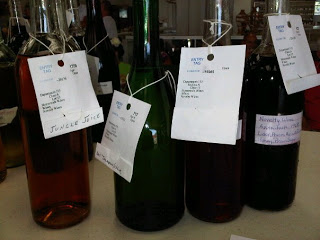 Recently, I have participated in a couple of County Fairs as a wine judge. The entrants were all home winemakers, and about 80% of the wines were made from fruit other than grapes. Historically, I had scoffed at fruit wines. As wisdom (perhaps) has crept in, I've begun to philosophically understand the importance of these wines.
I was surprised at how much I loved a few of the wines I tasted, especially a local blueberry wine that was mostly dry. The local fruit wines outshone the grape wines, either local or from kits. Local produce and the products made from local produce, usually, have the highest ceiling. No matter what anyone says, we just don't have great grapes to make wine from, so blueberries make a lot of sense.
This is a tremendous exercise for any wine professional. when you really start to delve into some 200 odd wines, made from a wide variety of different fruits, you begin to realize something: only grapes seem to present the "secondary" flavors that we associate with quality wines. Fruit wines, generally, taste like the fruit from which they came. Fruit wines also tend to surprise the seasoned wine cynics. They hit our palate and evoke memories long dormant (think of the ratatouille in "Ratatouille"). This really helped me to sort through the differences in cherries, raspberries, cranberries, etc on the palate
Making wine is difficult. It's tedious and messy. Making wine from fruit is as much a skill as canning or preserving, it's an important culinary trait. Grapes ultimately have more upside, but I suspect, it's much tougher to make wines from grapes than from fruit. Grape winemaking, must surely be the pinnacle of the fermented fruit arts, and tasting 200 good fruit wines, helped me to remember the skill it takes to ferment clean, and create wines that are even drinkable, let alone trans-formative.
The 2 things every rep can do to sell more wine
I work with nearly 100 sales reps on a regular basis. There is an alarmingly large proportion that don't do the 2 things that will help them to sell more wine. They are:
a) Ask for the sale. In an otherwise innocuous conversation, you may be compelled to be their friend before their rep. Make no mistake, you are there to sell wine, they are there to buy it. If you don't ask, they probably won't order it. This isn't selling something they don't want, it's not like not taking "no" for an answer. Pretend you're writing a "high school" paper and at the end of each meeting, you need to try to end with an "in conclusion" paragraph.
b) Reminders. Remember how you're there to sell wine? Sometimes your buyer likes something, and just isn't ready this week. They may ask you to remind them. Your odds of closing the sale are highest the day of the initial conversation, so try to do it then (see "a"), but if not, you'll need to remind them. I have always made it a habit of keeping the buyer reminded of all of the things they've liked. Organization and routine are key to this. I can't tell you how often I'll ride with a rep, and they'll be asked to remind the buyer. We'll get in the car, and the rep will assure me they'll close the deal next week when they remind them. I can always tell if they're telling the truth based on what they just reminded the buyer of. If they don't discuss previously tasted wines while I'm there, then the buyer's "remind me" answer became an automatic "no". While this can invariably be a cop out, sometimes, the buyer really needs a reminder. They may have 20 reps, it's hard to keep all of the slots straight. Your organization will be appreciated and rewarded.
These are 2 easy, routines to increase sales. They are usually a pretty good indicator of the level of sales training as well. It's nearly impossible to passively sell wine.
a) Ask for the sale. In an otherwise innocuous conversation, you may be compelled to be their friend before their rep. Make no mistake, you are there to sell wine, they are there to buy it. If you don't ask, they probably won't order it. This isn't selling something they don't want, it's not like not taking "no" for an answer. Pretend you're writing a "high school" paper and at the end of each meeting, you need to try to end with an "in conclusion" paragraph.
b) Reminders. Remember how you're there to sell wine? Sometimes your buyer likes something, and just isn't ready this week. They may ask you to remind them. Your odds of closing the sale are highest the day of the initial conversation, so try to do it then (see "a"), but if not, you'll need to remind them. I have always made it a habit of keeping the buyer reminded of all of the things they've liked. Organization and routine are key to this. I can't tell you how often I'll ride with a rep, and they'll be asked to remind the buyer. We'll get in the car, and the rep will assure me they'll close the deal next week when they remind them. I can always tell if they're telling the truth based on what they just reminded the buyer of. If they don't discuss previously tasted wines while I'm there, then the buyer's "remind me" answer became an automatic "no". While this can invariably be a cop out, sometimes, the buyer really needs a reminder. They may have 20 reps, it's hard to keep all of the slots straight. Your organization will be appreciated and rewarded.
These are 2 easy, routines to increase sales. They are usually a pretty good indicator of the level of sales training as well. It's nearly impossible to passively sell wine.
It's easier to say no than to have to break up with a winery
Since starting ampelography some 2+ years ago, I have thought a lot about what it takes to be a good rep/ supplier/ distributor/ winemaker/ buyer/ blimp pilot/ NBA free agent, etc. I had not, until now, thought too much about what it takes to be a really good winery partner. This, to date, has been my biggest failing.
I have assumed (despite my Father's clichéd warnings) that good wine + nice people would make good supplier partners. Sadly, it's just not that simple. I have learned that there are many hurdles to overcome when building a portfolio, and working productively with wineries. Here are some of the finer points I will now check on when looking at new producers:
I have assumed (despite my Father's clichéd warnings) that good wine + nice people would make good supplier partners. Sadly, it's just not that simple. I have learned that there are many hurdles to overcome when building a portfolio, and working productively with wineries. Here are some of the finer points I will now check on when looking at new producers:
- Do they run their business well? Desperation NEVER sells wine and makes you do bad things for branding.
- How is their consistency? Are the wines correct? always? Ever make any big mistakes? Do they really know what they're doing?
- Do they understand that the tasting room isn't the same as the street?
- Do they average less than one National Sales Manager/ year?
- What are their expectations? Are they realistic?
- Do they have a good distributor strategy?
- Do they respect you as the primary communication channel to the distributor and on the streets?
- How are their organization skills? Do they return emails, phone calls, etc?
- Can they keep you abreast of pricing, inventory, etc.?
- Tech Sheets? Marketing materials? graphics? anything?
Adelaida Cellars
 Spending time in Santa Barbara in the early 2000's, I was exposed to, but not intimate with Paso Robles. To me, at the time, the wines seemed to be good, not great, and certainly more rustic. I was exposed to endless overcooked Zins and Petite Sirahs, which tainted my initial impressions. Being that I am a devout Rhône-head, I was intrigued by some of the early proponents of these varieties such as Tablas Creek and l'Aventure. My interest was piqued by the possibilities.
Fast forward to 7 years later, as I was forming ampelography, I was approached by Paul Sowerby, the Sales Manager for Adelaida Cellars. I was familiar with Adelaida, and always had some affection for the wines from my early years in the industry, but hadn't tasted the wines in some time. As Paul guided me through a dozen or more wines, I was impressed by the balance and structure of these wines. The reds had no "over/super ripeness" and perhaps more impressive, the whites were just beautiful with a healthy dose of minerality. Where had these wine been? Why were they discovering me, when in reality, I should have come across these sooner. It was one of those moments of epiphany.
The subsequent summer, I took a trip out to Paso and spent the day with Paul in the vineyards and with winemaker Terry Culton in the cellar. Terry had clearly put his mark on the wines, which is to say a minimal hand. Terry worked at, among other places, Calera (which has always been one of my all time favs). Calera and Josh Jensen are known for being proponents of Limestone soil. Coincidentally, but probably not, Adelaida is largely situated on Limestone. This made perfect sense. Here's what I didn't expect: Adelaida is quite climatically cool. Most of their vineyards are 1800 ft above sea level and just a few miles from the Pacific as the crow flies. Tremendous air flow and marine influence from the Pacific + the Templeton gap from the south have really made this area unique within Paso Robles. So much so that there is a proposed AVA including a handful of additional top producers within this microclimate to be hopefully called: The Adelaida District.
Adelaida dates back to 1981, but the vineyards that comprise it are in some cases, much older. The oldest Pinot Noir vines south of Sonoma are here, at the HMR Estate. No one is sure of the clone, but it's cool climate, limestone soil, 40+yr old pinot vines that are naturally low yielding. Yeah, the wine is pretty good. In fact, it's one of the most unique, yet totally pinot-like wines I've ever had. The true stars though are the Rhône blends. Syrah and Mourvedre put on quite a show varietally speaking here, but once they are blended with the usual suspects, you get the sense of a wine with an amazing pedigree. The same holds true of the whites, the stars there are of course, Rousanne and Grenache Blanc.
It's easy to become cynical in the wine business, after a while you think you may have it all figured out. Then a small producer from a pristine corner of Paso Robles knocks on your door, and you begin to realize how much you still have to learn.
Randall Grahm Ohio interviews parts 1-4
Our good friend, Austin Beeman, interviewed Randall Grahm back in March while I was chaperoning him around Ohio.. This very well structured and respectful interview was conducted one morning in Akron. Randall has some tea, and was quite engaging. Kudos to Austin's interview style, I've seen countless "professionals" step all over Randall's thoughts. These are the first 4 parts of 10.
Austin has a video blog called Understanding Wine HD, you can also follow him on Facebook.
This isn't his first go-round with a world class wine personality, and his interviews are always fascinating.
Austin has a video blog called Understanding Wine HD, you can also follow him on Facebook.
This isn't his first go-round with a world class wine personality, and his interviews are always fascinating.
Affirmation Society
 Political talk radio, opinioned bloggers (ahem), sports talk, all are seemingly controversial, however, the reason for their existence is they make people feel better about themselves. As we form opinions, we lack confidence to make those opinions into conviction immediately. It takes time for these ideas and opinions to become part of our fabric. Pundits that say what we are thinking help us to become more confident in these fledgeling beliefs, until we feel that our opinions are fully affirmed. The rate of this transformation is more about our own self-confidence than the conviction of the person delivering the message.
Now place this in the context of a wine salesperson. Let's assume that most wine salespeople know how to talk the talk, but few reach a point that they have confidence in a vacuum. In other words, their affirmation comes from other sources as well. The further you go into this industry, the easier it is to be intimidated by very knowledgeable and loud (or even worse, knowledgeable and quiet) buyers, suppliers, etc. The lower our confidence (which is different from knowledge), the more we need affirmation to give confidence.
We all hate scores. We all rail against bias, ad selling glossies, smokers palates, etc, it's a very tired topic. Fine, and as much as I hate press, I love it for selling wine. I'm not talking about selling to accounts or consumers. It also works on reps, in fact, it probably works more on sales reps than anyone. As a supplier, it's important for the rep to have total and utter faith in you product. Absent of existing sales and momentum,I can't always just tell someone that I have great wines. Sometimes I need back up or affirmation. The best place to find that is in those loathed glossies. Once a rep starts to get confidence in the wine, they carry themselves differently, they are prouder and can now use this new-found conviction to help affirm the next person's belief.
My Peeps
 This crazy, mixed up world of wine we live in has a few governing principles. Of those, one of the most universal is that we're all a little damaged. That damage can be that we just don't fit into other business cultures due to genius, ADHD, or borderline personalities. That's what makes this so much fun, that we can connect to our fellow "damaged" people. If we are wine geeks, and indeed, you must be if you are reading this, we are inevitably geeks about other things. You can usually bet on the following mix of common interests in descending order of likelihood: Food, Music, Film, Art, Pop Culture, Liberal Politics, Environmental Issues, and Cars. Connecting to these people is one of the perks about this business, or as Cameron Crowe put it more eloquently: "The only true currency in this bankrupt world is what we share with someone else when we're uncool. " Lester Bangs-Almost Famous.
I am a supplier, my job is to sell my clients' wine. The best way to do that is to either get the salespeople from my distributors, or their clients excited about my producers. Since each salesperson's bandwidth is so limited, exposure and attention are difficult to find. One of the best ways I've found to connect with these people is through Twitter and Facebook. I don't believe in egregious self-promotion. I do believe in the ability to bond with like minded people through mutual interests in the forum of social media. As the years have built up, I've found that I bond with more reps and clients through these mediums, and take a away a tremendous amount on enjoyment and satisfaction over the connections, comments and general witticisms shared. As a result, I've been fortunate enough to develop a shorthand relationship with many people I see infrequently, but have a true connection with. Hopefully, each of the connections has an affinity for what I do (from a business perspective) and appreciates my dialogues with each of them within this community.
Would you hand a hot piece of iron to a distributor?
 Salespeople sell. Sales managers want salespeople to sell. It's in their DNA. Selling more wine can ultimately solve all problems. So why would anyone want to deal with "branding"? Simply put-the strength of your portfolio is often determined by how well your wines are branded. The success of many distributors is built by their branding efforts. Branding is the image and perception that you influence. Distributors have input into the packaging or language on the label, but the guerrilla branding is done by the distributor. The accounts you sell to, the way the wines are displayed. The waiters and clerks that sell to the end-user, and their training. This all helps or hurts your brands. Taking the time to execute this well is the most important thing a distributor can do for the long term health of a winery.
So why is it seemingly so hard to execute? Reread the first line of this post. Branding slows down sales. Branding can get in the way of a commission check. Salespeople, by culture (Pavlov's dog. Higher sales=bigger check=conditioning) are single minded, you probably can't change this. Frankly-you probably shouldn't change this. While writing this I keep seeing images from "One flew over the cuckoo's nest" for some reason. In order to brand a winery, someone, with authority, needs to devise a branding strategy, and set a road map for salespeople to execute while increasing sales. There is a nimble balance, but at the end of the day, it adds value to the portfolio and long term brand equity. Your wineries will thank you for taking the time to do this.
Dare to be great situation
 My all time favorite movie, "Say Anything" is full of inspiring, and hilarious moments, perhaps none more inspiring than the following:
Mike: I don't know you very well, you know, but I wanted to ask you - how'd you get Diane Court to go out with you?
Lloyd Dobler: I called her up.
Mike: But how come it worked? I mean, like, what are you?
Lloyd Dobler: I'm Lloyd Dobler.
Mike: This is great. This gives me hope. Thanks.
When I worked for a small distributor, I heard this sort of line from many of my small competitors. Being small, and boutique doesn't mean you don't deserve to play with the big boys. Sometimes a little unbridled enthusiasm and not knowing what you're not supposed to be able to do goes a long way.
The lie in your sample bag
Wine samples are one of the best ways to demonstrate the character of a wine. As a rep, we take a bag full of different wines to show our customers. It is assumed that every day, we will bring a fresh set of samples, and the wines will show very much as they would if you opened it and drank the entire bottle in one or 2 evenings. In many cases, in an effort to save money, either from the distributor, or the sales rep (preserving their sample budget), the rep takes wines out a second day. This is one of the absolute worst things a rep can do.
Day 2 wine samples are very different than day 2 wine on your counter. Every time you open the bottle, pour a splash, you are decanting the wine. With that fresh oxygen in your bottle, you now take that wine, shove it in a bag, swing it for a walk to the car, stick it in the trunk, and then speed off to the next account. Silently, in your trunk, the wine is continuing to react to the new oxygen and agitation. A half dozen accounts later, and you have effectively aged this wine the same as spending 3 days of being open on your counter. Take that same wine out day 2, you are a) not really going to sell anything based on the tasting profile b) showing a wine that isn't acting like itself, doing a HUGE disservice to the brand and the people that made that wine. Many accounts won't really comment about a wine on the second day because they may not know how the wine is supposed to taste, they will just be underwhelmed and pass on the wine and the brand.
There are of course some exceptions. You can't kill Amarone or Ripassa. Many high alcohol, high acid wines do well on day 2. Warm weather wine that doesn't see much oak does ok, and the best for day 2 is without a doubt, great Mosel Riesling (ironic since it is such a delicate and seemingly sensitive wine). This is a limited list, and most aren't really optimal on day 2 (except Mosel Riesling).
If you have concerns about stretching samples, pull 2 bottles or squeeze in more appointments. You can always contact the supplier and ask for a free sample bottle, they will always prefer to pay for a bottle vs you showing a bad day 2 version of their wine. At the end of the day, it's a judgement call, and it's your judgement call.
Day 2 wine samples are very different than day 2 wine on your counter. Every time you open the bottle, pour a splash, you are decanting the wine. With that fresh oxygen in your bottle, you now take that wine, shove it in a bag, swing it for a walk to the car, stick it in the trunk, and then speed off to the next account. Silently, in your trunk, the wine is continuing to react to the new oxygen and agitation. A half dozen accounts later, and you have effectively aged this wine the same as spending 3 days of being open on your counter. Take that same wine out day 2, you are a) not really going to sell anything based on the tasting profile b) showing a wine that isn't acting like itself, doing a HUGE disservice to the brand and the people that made that wine. Many accounts won't really comment about a wine on the second day because they may not know how the wine is supposed to taste, they will just be underwhelmed and pass on the wine and the brand.
There are of course some exceptions. You can't kill Amarone or Ripassa. Many high alcohol, high acid wines do well on day 2. Warm weather wine that doesn't see much oak does ok, and the best for day 2 is without a doubt, great Mosel Riesling (ironic since it is such a delicate and seemingly sensitive wine). This is a limited list, and most aren't really optimal on day 2 (except Mosel Riesling).
If you have concerns about stretching samples, pull 2 bottles or squeeze in more appointments. You can always contact the supplier and ask for a free sample bottle, they will always prefer to pay for a bottle vs you showing a bad day 2 version of their wine. At the end of the day, it's a judgement call, and it's your judgement call.
The whole megillah
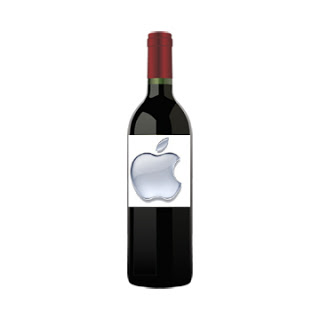 Steve Jobs is evil. Steve Jobs is brilliant. Steve Jobs is megalomaniac. Sick of hearing about Steve Jobs? Me too. However, he is the shining example of "user experience" for consumer products. Apples feel and act differently. The sounds they make, the package they come in, the store you walk into, the support you receive. He has defined exactly what your experience will be in regards to his sacred fruit, and for that, he is a genius. We need to approach wine in the exact. same. way.
There is a disconnect between what's in the bottle, what's on the bottle,and how we get the bottle into your hand. Using Apple as a guide, we should be rethinking how we deliver that user experience. A more distilled approach may be that we need to give affirmation of the correct purchase.
Since a bottle of wine is a decidedly smaller investment than a computer (usually), and more acutely judged, the experience needs to strike hard and fast. Every tiny decision that goes into the ultimate purchase and consumption can shape the experience of that wine.
Bad name? Difficult to pronounce? That wine will need to overcome these obstacles not only to find itself a home, but to get a repeat buyer. Wines you can't pronounce or remember will give you less bragging ability. Don't think this is important? Any day now I'm expecting Apple owners to start going door to door with cheap short sleeve dress shirts asking if I've heard the good word. Part of consumer satisfaction is the ability of the owner of the product to revel in the brilliance of their selection. Bad names make this difficult. Why do names like Jordan and Silver Oak resonate?
Fit and Finish is thrown around when describing Apple as well. This translates exactly to the bottle appearance. Not just the label, but the details, foil, closure, size and shape of the bottle, color of the glass, these all speak to emotional satisfaction just like brushed nickel and soft white light does. We've all beaten the topic of labels to death, but I will say this without hyperbole- The most important single decision you can make, marketing-wise is the label, and winery owners' hubris derails this faster than anything.
The way the wine is sold has an impact. Communicating an interesting story all the way down the supply chain can have a huge impact. The end consumer being able to tell the story of a winery is absolutely irreplaceable. This is part of that invaluable emotional connection.
The wine needs to fulfill all of the promises made. Promises as to what's in the bottle are made at every micro-decision deep within the brain. The package, the story, the name. they are all part of that expectation. This is not as simple as a checklist, but rather an emotional and mental bridge connecting all of the extraneous factors and the way the wine tastes.
When all is said and done, and true satisfaction is met, the consumer will want to affirm their decision by repeating as much about their experience as possible. This is evangelizing. See Guy Kawasaki for more about evangelizing a product. And this, this enthusiasm, this consumer selling for you, this proselytizing , this is what Apple does. If they just built great computers or OS, they'd be Linux, but because they control the User Experience they are Apple.
2 years! 2 years.
April 1, is the 2 year anniversary of official start of ampelography. I'm less nostalgic than introspective about the date. Interestingly enough, I'm just now beginning to be understand what my job is. That's an awfully strange proclamation to hear myself make, but I'll lay out some nuggets of what I've learned in the last 730 days, and maybe you'll agree.
- If you have good marketing, good people, good wine, and the correct prices, distributors can only fail you
- Wine is visceral, understand this
- Distributors are always highly protective of their worst salespeople, if they weren't, they'd be long gone
- wine country will always make you late, plan to take longer to get where you need to be.
- The faster a distributor pays, the slower they place orders and the faster they place orders, the slower they pay. I don't know why.
- Some distributors appreciate the support, some resent it. If they don't appreciate the support, you have no swing with them whatsoever, don't even waste your time.
- Some wineries are just assholes
- If you can't inject your personality into the proceedings, what the hell good are you?
- There are 2 kinds of people in this world, wine people and sales people, surround yourself with the former, identify the latter. Salespeople will never be irrelevant, but they'll derail a wine person without acknowledgement.
- On Premise builds brands, the wrong off premise can destroy them. If you wheel and deal with retail, it will catch up with you.
- If your distributor replies to 20% of your emails, it's because they like you
- The hierarchy is as follows: Winemaker, Owner, National Sales, Broker, Sales rep. Brokers just aren't important to buyers.
- If every time you see someone, you bring them something interesting, new and a great story they'll always welcome you and your wines.
- Want to impress a chef with your wine knowledge? Talk to them about food.
- Be a foodie.
- You will have allies, they may take time to identify, but they're integral to your success and will sell for you when you're not there. Never take them for granted.
- I'd rather be someone's first workwith than the 100th.
- Always stop for lunch.
- No matter how tempting it may be, don't throw your distributor under the bus.
- If you write enough blog posts, one day you may actually meet people that read them.
PT Barnum and his "declassified" Scarecrow
 Ever walk into a retailer and have them extoll tales of the double secret declassified grapes that Cult Napa producer basically gave away? It's one of the most cliched scenarios, retailers make bank off this idea, and the reality is, you're getting duped. It's not necessarily the retailer that's doing the duping though. It could be the producer, it could be the distributor. No matter, the truth is, you just cant get Screaming Eagle for $30.
There are 2 ways for the winery to get grapes, they can grow it or they can buy it. Most of the great wines are vineyard specific, or at least a small collection of vineyards specific. None of the top producers use all of their grapes. Not because there's not a market or because they need cash, but because the grapes simply don't make the cut. No matter how good a vineyard may be, there will always be some sub par grapes. Rather than throw these away, they are often sold off on the open market, sometimes as grapes, sometimes as juice, sometimes as finished wine. Typically, there's not enough of any one of these producers left to do anything substantial, production wise, so they need to be blended with other sources. This is the great secondary market, and it produces some very solid wines. For a $20 Napa Cab, or a $15 Monterey Chardonnay it's worth every penny.
Once in a great great while, an esteemed producer will declassify their grapes because their harvest was inferior. They will either put these into one of their own proprietary wines, or sell these off to a separate label. It's these wines that are rumored to be "whisper whisper whisper, Napa Cab" that usually sells for $100. It actually doesn't really matter if it is. This isn't TJ Maxx, the wines are getting discounted because the label is ripped, or last year's item. They are discounted because they are inferior. That means they're not up to their standard, so no, it's not Screaming Eagle. Your harvest is everything, when it sucks, it sucks. You just can't fix it. I'm not saying the wines are undrinkable. Maybe, in the right hands, the wines can be quite good. Then you throw in the rumor/ hype factor. By the time the information gets to you, how accurate is the story? The bottom line is, you get what you pay for most of the time. Don't get super excited that a retailer tells you about the amazing deal they scored by a declassified something or other. Just remember it got declassified for a reason.
Let your customers in
 I'm so sick of hearing about your social media, blah, blah blah. We're all on Facebook now, and frankly, many of us have moved on after the awkward reconnection with high school friends we barely remember. What are you supposed to do with Facebook if you don't do farmville? Twittter? Yeah, I do that to, but keeping up with all of the goings on over there can be somewhere between counterproductive and obsessive. For those of you that have found the balance for twitter in your lives, including my brothers (@endcycle, @bradmahler), you are more man than I (or perhaps just less neurotic). And LinkedIn, well, that's just really no fun. Apparently, you're not supposed to have a sense of humor and be in business.
So what's a guy to do? Here's my solution, and I think I have some evidence it works. I decided a while back that social network is like public speaking (I guess, in some form, it actually is public speaking).With public speaking, you sort of just have to go for it. I speak to crowds rather frequently, and I'm just not the polished public speaker type, but I have to let my personality come through. If I didn't I'd end up in a fidgety fetal position. So I let it fly, because that's the only way I deal. In the end, I get comments like "impassioned", "funny", and sometimes "weird". That's ok, that's who I am, and at least I'm being honest. Facebook should actually be the same way. I am a highly opinionated individual, releasing those opinions and experiences on facebook have proven to be a good thing. I don't want to get too narcissistic, but, that's sort of what it's there for. I have 2 places for facebooking, my personal page, and my business page (facebook.com/ampelography). I basically use my business page to talk about wine, and personal for everything else. I try to keep both light and witty, with my personality imposed on both. Here's what I've discovered: this has helped the people around me (customers & consumers) to get to know me a little better. And it's really me and my personality. If, as a salesperson, you're trying to make that personal connection, what's easier than letting your acquaintances read about your adventures and opinions about crappy movies? It turns out that even though not everyone feels compelled to post (it is like public speaking), many read, and they read daily. For business, it can be very good that your customers, even though they may not actually interact with you or your posts, have registered opinions and thoughts about things you've said or done. When you walk in that door to sell them something, it's not that it's been months since you've seen them in their mind, they're already caught up.
So how do i know they're reading? what's the impact? Well, in November I grew a beard. It was my "downtime beard" and before market work season returned (mid-Jan) I shaved it off. For the last 3 weeks I've been criss-crossing my market, seeing many of my customers for the first time in 2011. What did I hear more than anything? "oh, you shaved your beard". I didn't know they knew I had a beard, but there were a few photos i was tagged in over the holidays with beard. In their mind, the online reality and the actual reality were now the same. The most important thing is as these customers/ friends have gotten to know me better, they like me more (or are at least more polite),and they buy more wine from me.
The freedom to say "I don't know"
I was just reading a "manifesto" from a winery (which in itself may be a bit narcissistic, but hey, they're winemakers). In it, they discuss how they harvest their grapes earlier than most, with resulting alc% around 13%. Unlike many consumers, I have a fair amount of exposure to these sorts of wines. One of my very favorites to evangelize is Nalle out of Dry Creek. Nalle has a similar approach, and their wines are amazing. Their pinots are burgundy. I don't mean because of the color, or because of the acidity, many wineries acheive this, but because of the prominence of the creaminess on the palate. So I know what they are talking about, and I'm into it. But this goes against conventional California wisdom. We usually rave about hang time, and letting acids set. Those acids go hand in hand with alcohol, which we all rail against. Then's there the whole lignification argument.
Further confusing this is the impassioned exposure I've had to many producers that make nearly 16% Syrahs that are amazing. Not Shiraz-like, but rather tertiary with olives, and bacon, and coffee, and campfire,and menthol,and all of the secondary flavors and aromas that don't come from sweet over extracted wines. Oh, and did I mention that you can't tell the alcohol is knee melting? So how can both realities exist? How can wines and grapes be maximized by 2 completely divergent harvesting philosophies? The answer is "I just don't know". I am a winemaking geek, but I've never made wine, nor do I ever intend to make wine. I think the different approaches are fascinating, and both approaches, along with dozens of others, fascinate me. I don't pretend to believe one over the other. If there was enough of a groundswell of agreement about the correct way, we'd all be drinking the same wines. Doug Nalle makes wines he likes, as should every winemaker.
I often talk about how we are naturally inclined to try to find rules and easy understanding of complex systems. This is human nature. I've abandoned hope for figuring out the right way to do things (winemaking), I like them both, and many in between. So at this point, I still believe in Chupacabra, The Loch Ness Monster and Bigfoot. You know what? That's ok, because I'm not a Cryptozoologist either.
Further confusing this is the impassioned exposure I've had to many producers that make nearly 16% Syrahs that are amazing. Not Shiraz-like, but rather tertiary with olives, and bacon, and coffee, and campfire,and menthol,and all of the secondary flavors and aromas that don't come from sweet over extracted wines. Oh, and did I mention that you can't tell the alcohol is knee melting? So how can both realities exist? How can wines and grapes be maximized by 2 completely divergent harvesting philosophies? The answer is "I just don't know". I am a winemaking geek, but I've never made wine, nor do I ever intend to make wine. I think the different approaches are fascinating, and both approaches, along with dozens of others, fascinate me. I don't pretend to believe one over the other. If there was enough of a groundswell of agreement about the correct way, we'd all be drinking the same wines. Doug Nalle makes wines he likes, as should every winemaker.
I often talk about how we are naturally inclined to try to find rules and easy understanding of complex systems. This is human nature. I've abandoned hope for figuring out the right way to do things (winemaking), I like them both, and many in between. So at this point, I still believe in Chupacabra, The Loch Ness Monster and Bigfoot. You know what? That's ok, because I'm not a Cryptozoologist either.
Believe in your book
 We are the middlemen (or women) of the wine industry. We are the "tiers". We add cost to the consumers' bottles. We are human though, we need something to motivate us. We do not do this solely to make money. Actually, there are plenty of people that do this solely to make money, but they drive company cars and rarely read wine blogs. For the rest of us, we can feel unfulfilled. We want to feel affinity for something, someone, at least I do.
We are the part of the process that no one really likes (generally). We want to feel that connection with a greater purpose. For me, and most of my colleagues, it's about the "Book", the "Portfolio", the "Collection", whatever you call it, it is the groups of wines you sell. It's about taking that sample bottle out of the bag and blowing your customer away, and then doing it 3 to 5 more times each time you see them. The need to hear "wow", it's insatiable. Yet, few of us have ever had the fortune of building or contributing to a portfolio. I can tell you, it's the most satisfying thing I do professionally. Turning someone on to a producers that I "discovered". In truth, i didn't discover anyone, but I got to some before anyone else did. I recognized they had something special and had good timing. This is fulfilling. It also helps to fill this vacuum of doing something important. We identify with our group of producers, and they can define us.
My inspiration for this post was originally to criticize one of my critics. I gave a particular wine a pretty hard time recently, and someone that sells this wine took it pretty personally. I was going to rail against them for not being able to step back and have the proper perspective. The reality is that, neither do I. I am intoxicated (no pun intended) by the wineries I represent. I can no longer be a critical thinker about my group. I'm not blind, but now I have prejudice about my producers (in a good way). Looking at your portfolio without impunity is emotionally important, and in the end, makes us better sales reps. If you give in to the need to love a product conceptually, and this is how you earn your keep, this is the fulfillment. This passion will be contagious among your clientele, and in turn, through the consumer base. This will give you satisfaction, and it will help you sleep at night.